Metal roofing installed without a vapour barrier or an Anticon-style roofing blanket commonly develops condensation on the underside of the sheets. That moisture wets insulation, timber and ceilings, creating conditions for mould. The issue is well documented in houses, sheds and commercial buildings, especially in cooler Australian climate zones and anywhere indoor humidity is high.
How the problem forms
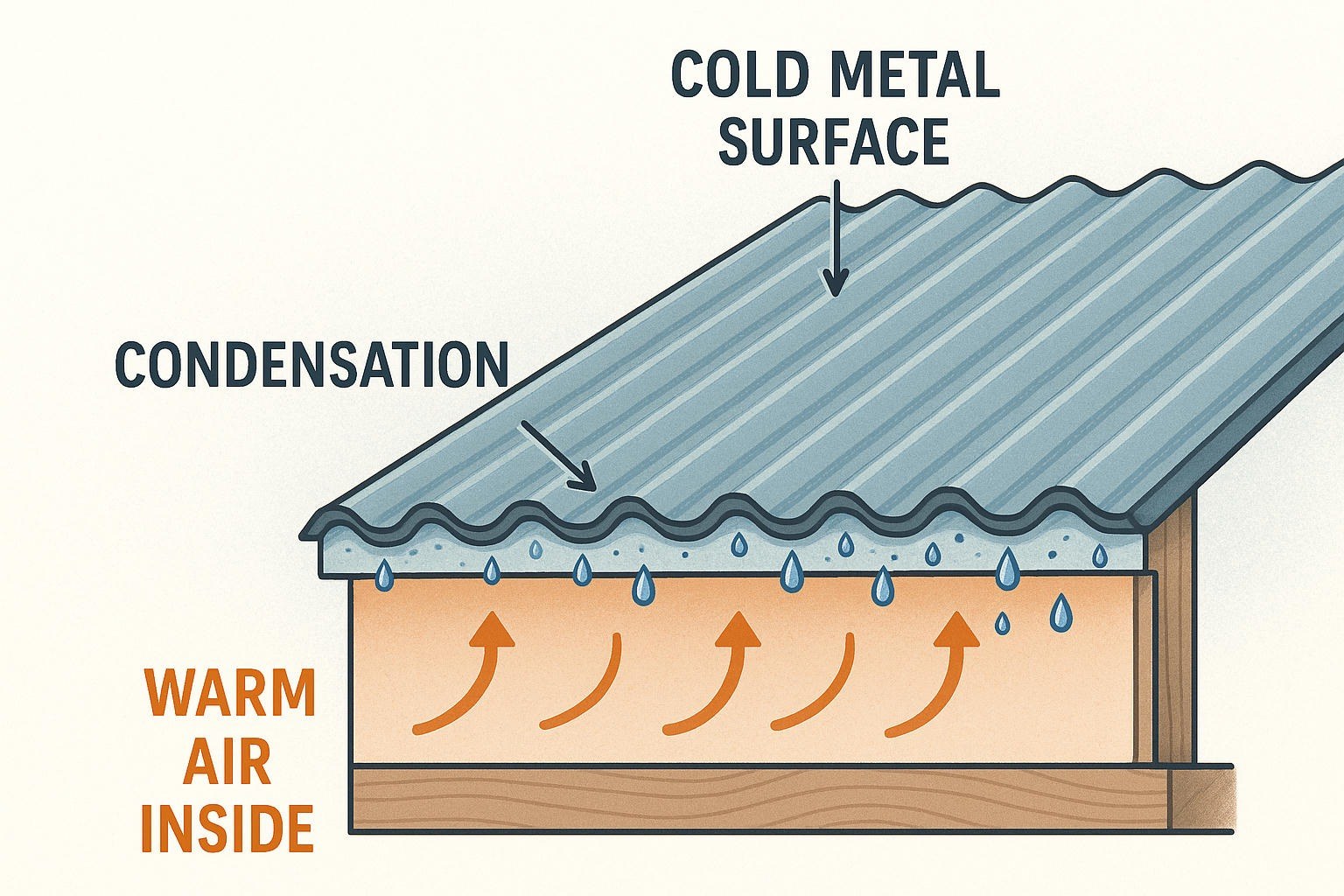
Metal is a good conductor and has almost no moisture-buffering capacity. On cold, still nights the roof sheet often drops below the dew point of the air in the roof space. Warm, moisture-laden air from living areas — showers, cooking, breathing, and unvented exhausts — rises through plasterboard and ceiling insulation and hits that cold metal. Water then forms as mist, then droplets.
Without a barrier or insulated blanket immediately under the sheet:
- Moisture reaches the metal unimpeded.
- High levels of ceiling-only insulation can make it worse by keeping the roof cavity colder.
- Poor roof-space ventilation traps the vapour.
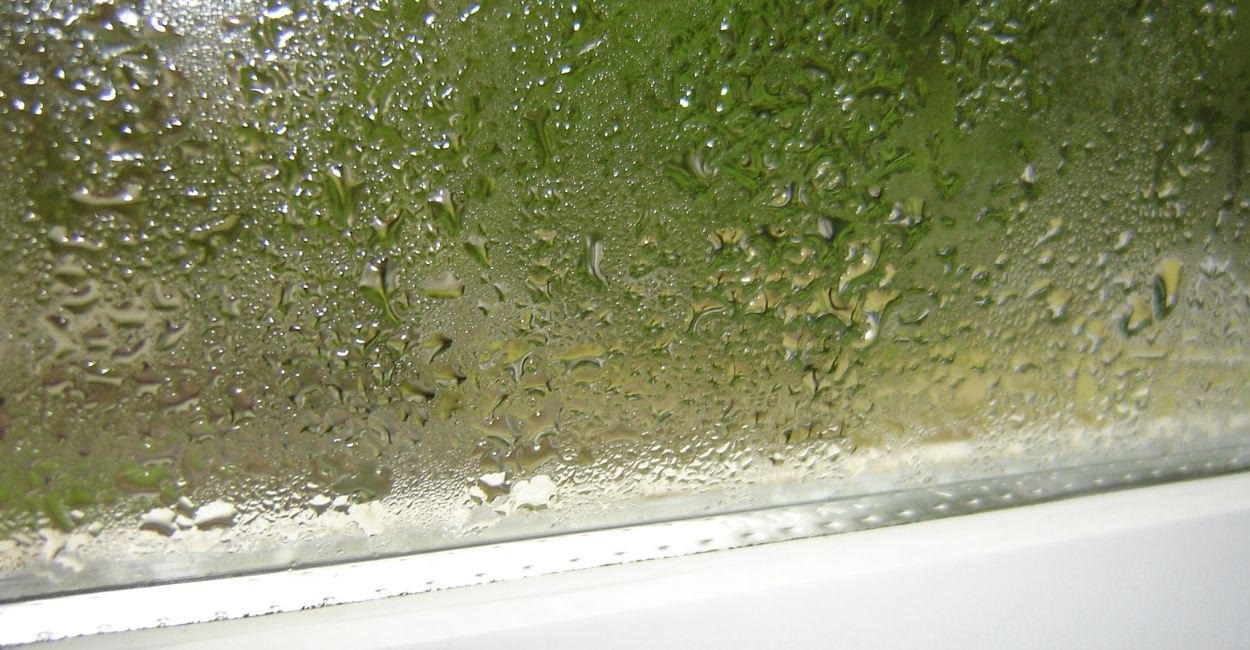
Anticon (anti-condensation) blanket is a glasswool layer bonded to reflective foil, laid directly under the metal. The insulation keeps the foil warmer so it stays above dew point; the foil also acts as a vapour control layer. Sarking (reflective membrane) plus ventilation is the other common approach. Skipping both leaves the cold metal exposed to moist air.
Typical mould and moisture issues
Once condensation is regular, problems compound:
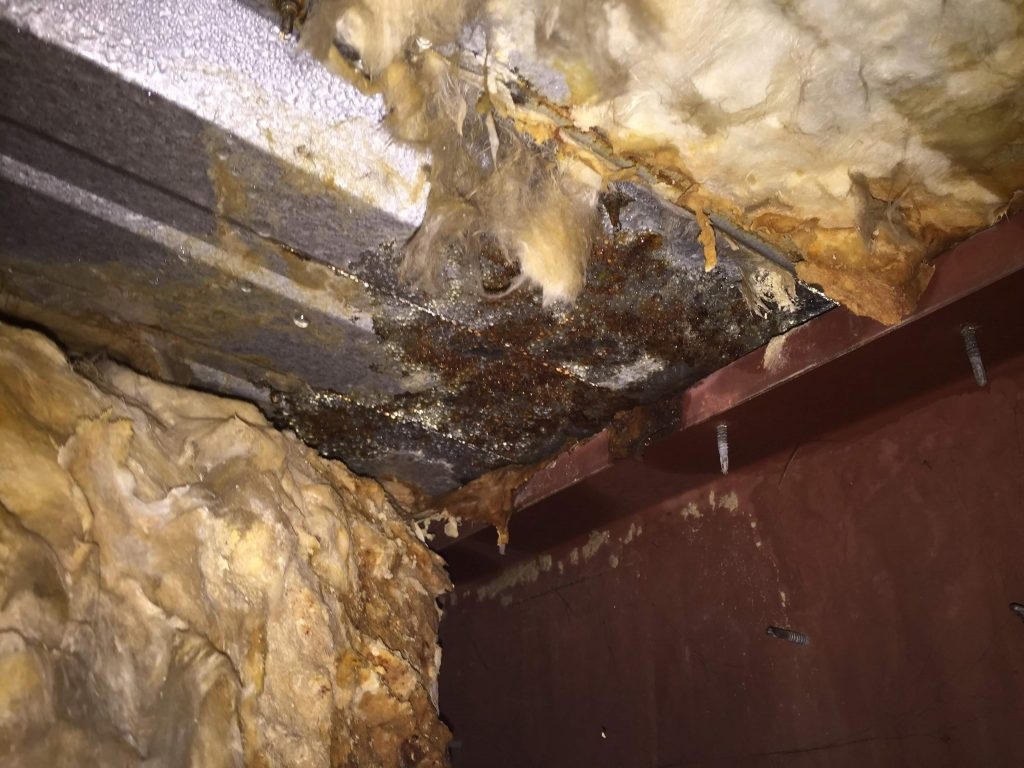
- Dripping and staining. Droplets fall onto ceiling insulation and plasterboard and are often mistaken for roof leaks.
- Saturated insulation. Batts lose R-value, sag and stay damp. Wet insulation is an ideal mould medium.
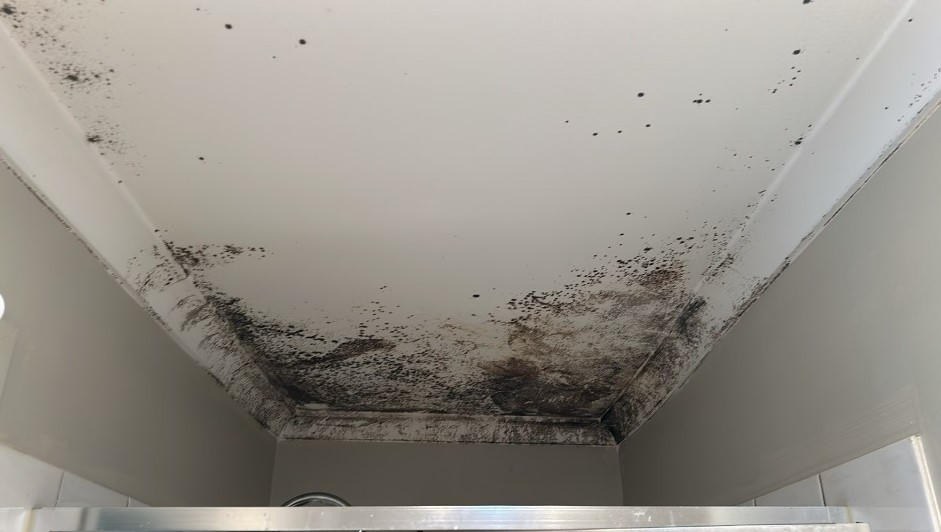
- Mould on ceilings, rafters and insulation. Black or grey spotting on plaster, timber and the underside of the roof space. Musty odours follow.
- Timber decay and corrosion. Prolonged wetting of battens, trusses and the underside of steel sheets. Rust often starts at fasteners and laps and can progress from the inside out.
- Indoor air and health effects. Mould spores and elevated humidity in the living space.
These issues are more common where bathrooms and kitchens vent into the roof cavity, occupancy is high, or the climate is cool. NCC 2022 introduced explicit roof-space ventilation rules in climate zones 6, 7 and 8 for this reason. The Gold Coast is climate zone 2, so those roof-space ventilation rules do not apply here. Condensation can still happen in this climate.
What the missing layers are meant to do
- Vapour barrier / foil facing — slows indoor moisture from reaching the cold sheet.
- Anticon blanket — adds a thermal break so the surface facing the roof space stays warmer, plus acoustic and summer-heat benefits.
- Ventilation — still needed. An impermeable foil with no path for vapour to escape can itself become a condensation surface if the roof space is sealed and moist. Modern practice often pairs a vapour-permeable membrane with a ventilated cavity rather than relying on foil alone.
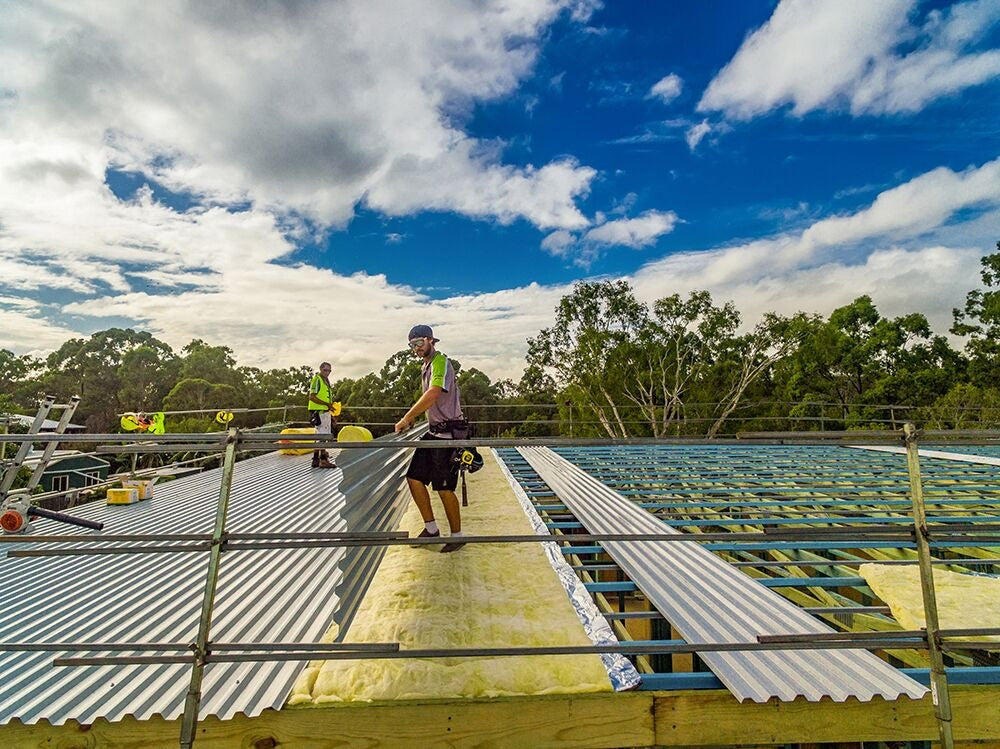
Correct installation matters: foil overlaps taped, blanket not compressed hard against cold battens, product trimmed clear of gutters so it cannot wick water, and moist air ducted outdoors rather than into the roof.
Practical takeaway
Metal roofs themselves do not cause mould. The combination of a vapour-tight, thermally conductive skin with no control layer and inadequate ventilation does.
New work should follow the NCC condensation-management requirements that apply to that building, and manufacturer detailing, rather than relying on metal sheeting alone.
Notes
This is a general briefing based on industry guidance for metal roofing, condensation management and products such as Bradford Anticon.
Key references include manufacturer and industry material on Anticon / sarking selection, BlueScope condensation and insulation guidance, and NCC 2022 condensation-management provisions for roof spaces in cooler climate zones.