
If you've got small stains on the ceiling that keep coming back, drips that only show in heavy rain, or circular marks in the roof space with no cracked tile above them, the water may be tracking down a clip — not coming through a hole in the tile.
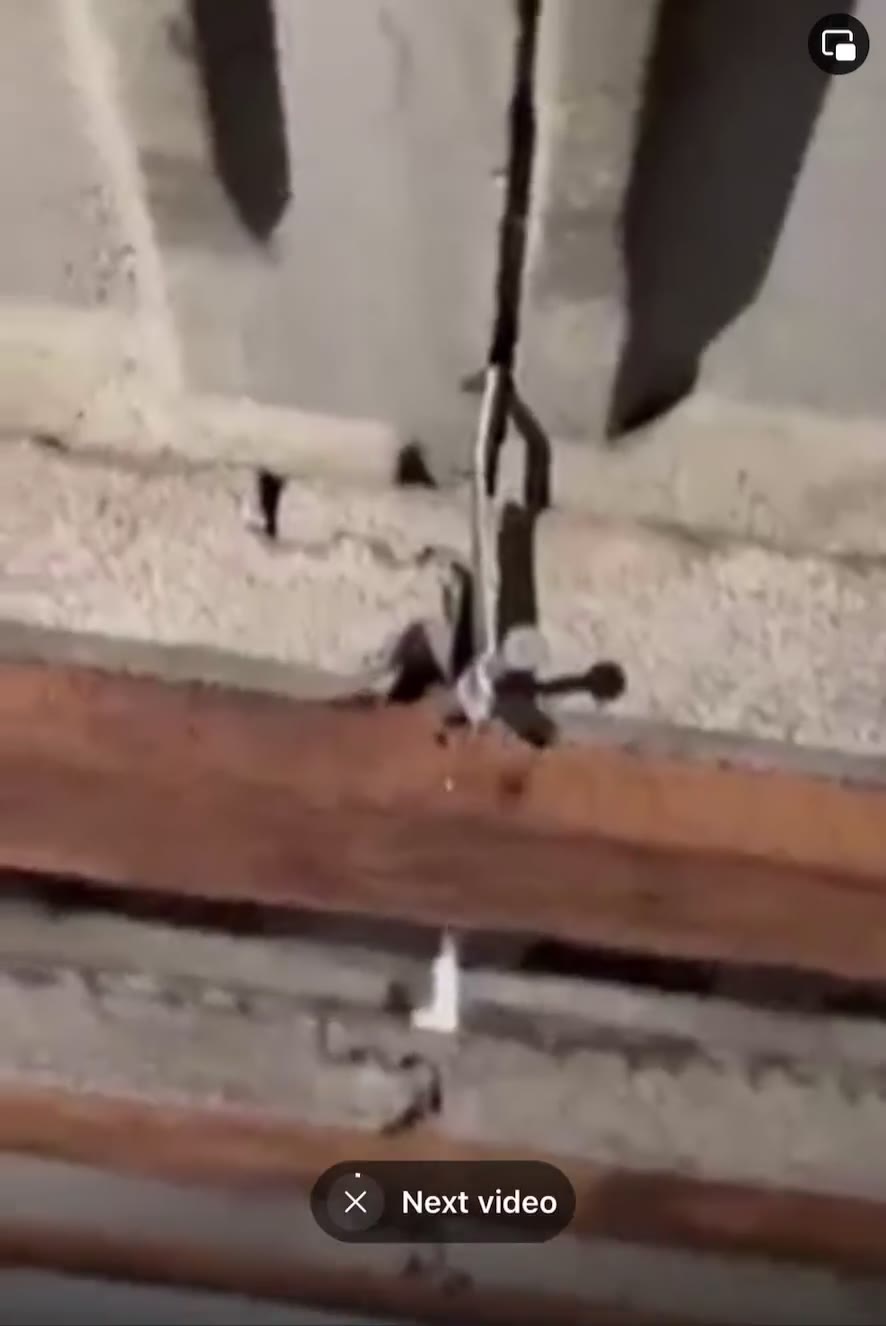
Watch the video at https://www.atacroofing.com.au/knowledge/flat-tile-clips-leak.html.
What tile clips do
Tile clips (sometimes called storm clips or cyclone clips) hook onto the tile and fix it to the batten underneath. They're there so wind can't lift the tiles. Australian tile installation practice, including AS 2050 Installation of roof tiles, treats mechanical fixing — nailing, screwing or clipping — as part of keeping a tiled roof in place.
So the clips are doing an important job. The problem is what happens when an older flat-style clip meets water in the tile watercourse.
How an old flat clip becomes a leak
Tiles overlap, and most have a small channel (the watercourse) where water is meant to run between them and down to the gutter. Older flat (nail-style) clips use a flat metal strap that sits right in that channel and is nailed into the batten. Over time, dirt, leaf litter, pollen and grit from the tiles can build up against the strap like a tiny dam. Water then backs up, hits the clip, and runs down the metal into the roof cavity — not as a drip, but as a steady stream when the rain is heavy.
Queensland roofing contractors who deal with tiled roofs describe this as a common, slow leak on roofs that still have the old nail-style clips: it may not show as a big stain on the ceiling for a long time, while the roof space above quietly gets wet. Even without much debris, a flat clip that's off-centre or poorly seated can trap water the same way.
Old flat clips vs newer spring clips
There are two clip styles you'll hear about:
- Older flat (nail-style) clips — a flat strap (or hook) across the watercourse, usually nailed into the timber batten. These are the ones known for leaking once debris builds up against them, and they're still common on older tiled roofs.
- Newer spring-style clips — a spring or wire design that holds the tile without using a flat strap as a barrier in the watercourse. Water can pass around both sides of the clip and keep flowing to the gutter. New roofs typically use this style, and it is much less prone to the damming leak described above.
You still need clips — Australian practice expects tiles to stay mechanically fixed for wind. The fix is not to leave clips off; it is to use a clip design that doesn't dam the watercourse. Spring clips are the usual replacement when old flat clips are leaking.
Why flat-profile tiles make it worse
Contoured tiles have troughs that carry most of the rain away from the side joints. Flat-profile tiles don't. Rain spreads more evenly across the face of the tile, so more water sits on the lap and in the side watercourse — right where an old flat clip sits.
Manufacturers know this. Monier's Horizon flat concrete tile, for example, must be installed with sarking, and Monier's roofing design guidance says all flat concrete tiles must be installed with sarking. Sarking (the foil underlay under the battens) is the second line of defence: it catches water that gets past the tiles and sheds it to the eaves. Bristile's concrete tile manuals likewise treat sarking as the secondary water catchment, and note that flatter profiles leave water freer to be blown across the roof and into the under-lapping watercourse.
If that sarking is missing, torn, or was never fitted in that part of the roof, a clip leak has nowhere to go but into the ceiling. The video above shows an unsarked section with an older-style clip path — which is why the water reaches the cavity so freely.
Signs it might be clip leaks
- Small, repeated ceiling stains or mould patches after rain
- Circular drip marks on the underside of the ceiling lining, or on insulation in the roof space
- Leaks that appear in heavy rain but dry up quickly afterwards
- More than one "mystery" leak with no obvious cracked tile above it
- An older tiled roof that still has flat (nail-style) clips rather than spring clips
Insulation and foil can hide the problem for a while, so what you see inside the house is often only the tip of it.
What to do about it
A proper look usually means lifting tiles around the wet area (and often further afield once you start), checking each clip, and cleaning out the watercourses. Replace leaking or old flat (nail-style) clips with spring-style clips so water can pass both sides again. Cracked tiles — including cracked watercourses sitting on nail heads — should be replaced. Sarking should be checked where it's accessible: if it's damaged or missing under the leak, that needs fixing too, or the next wet spot will find the same path in.
Painting or "sealing" the tiles won't stop clip leaks. Paint doesn't waterproof the joins, and sealing tiles together can trap water with nowhere to escape.
You don't need a new roof for this. It's a remedial repair job: find the old flat clips that are wetting, clean the channels, swap them for spring clips, replace what's cracked, and make sure the underlay is doing its job.