
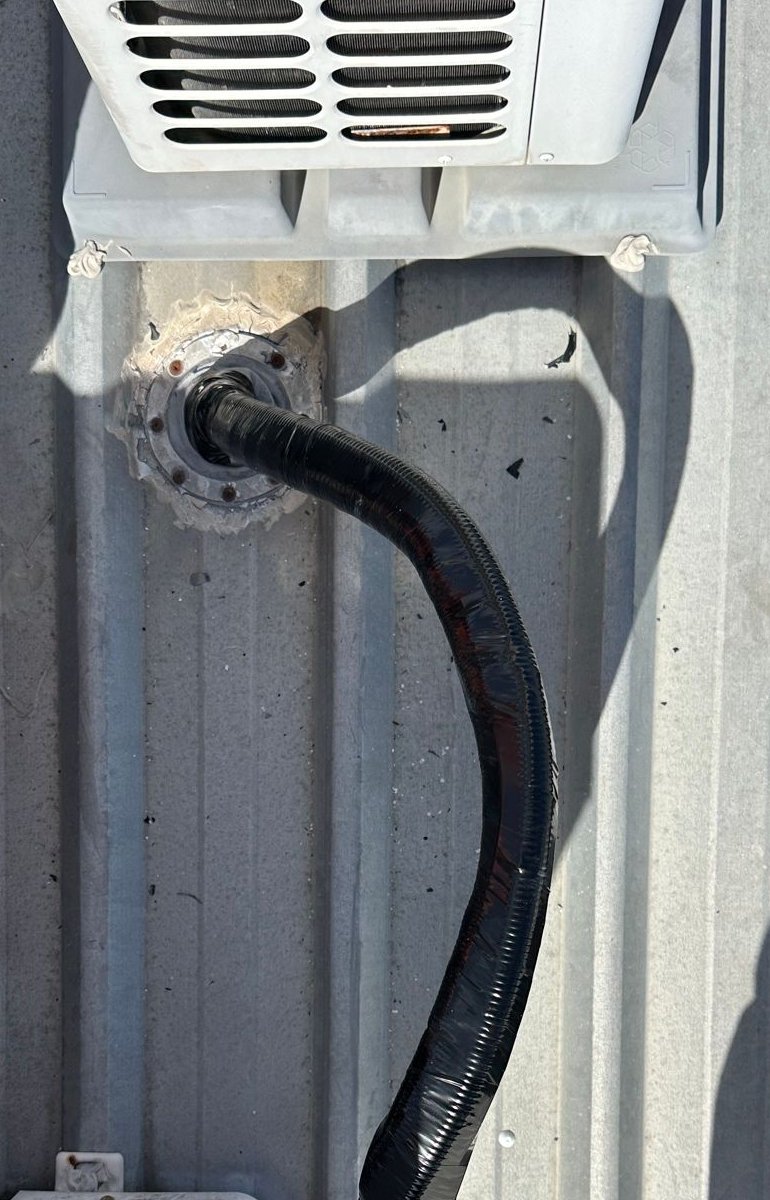
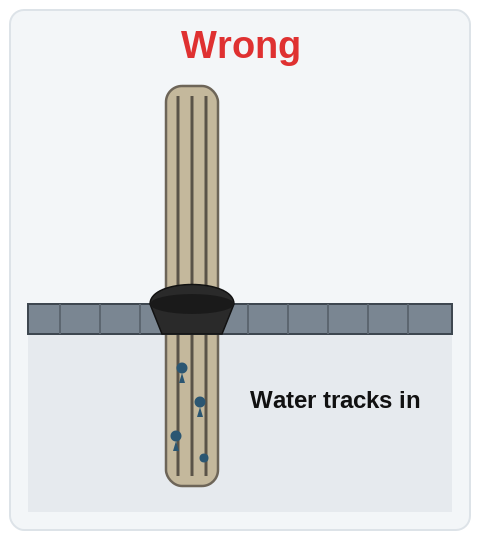
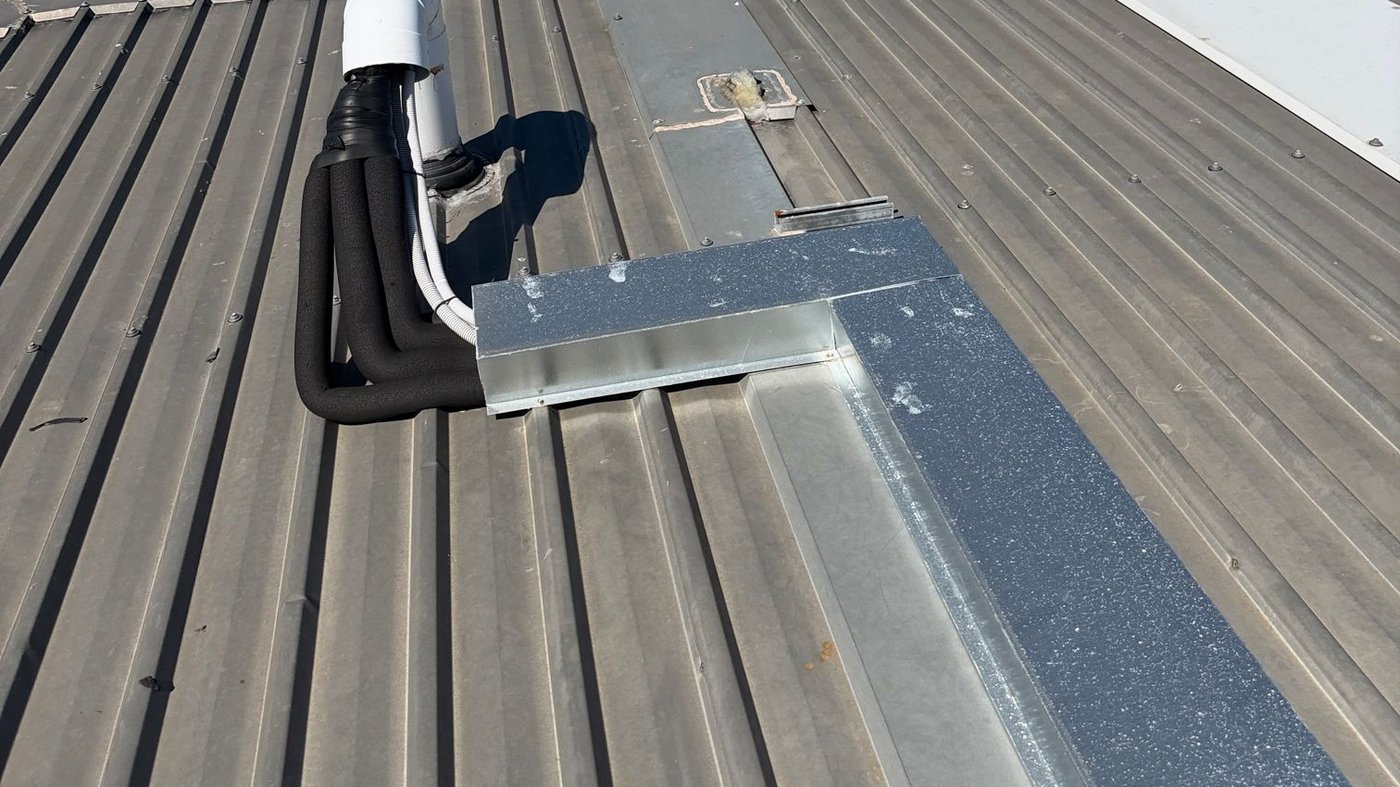
On a metal roof, air-conditioning pipes, cables and conduit often go straight down through a hole in the sheet. Rain can then track along the lagging and between the pipes and cables, and into the roof — even when the lagging still looks intact.
A gooseneck or U-bend fitting, such as a DEKS Top Hat roof kit, changes that path so water cannot follow the pipes in.
Why water tracks in
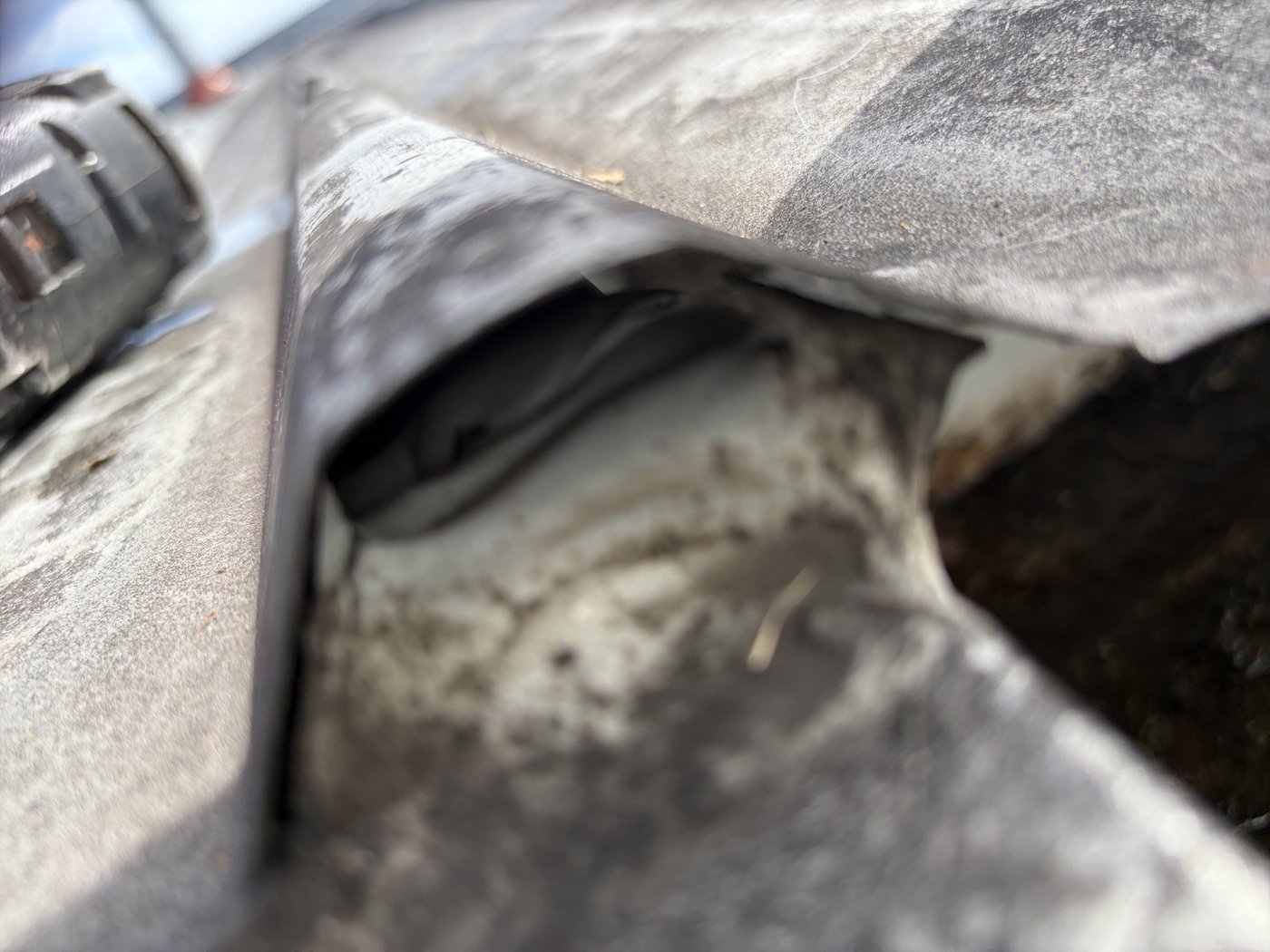
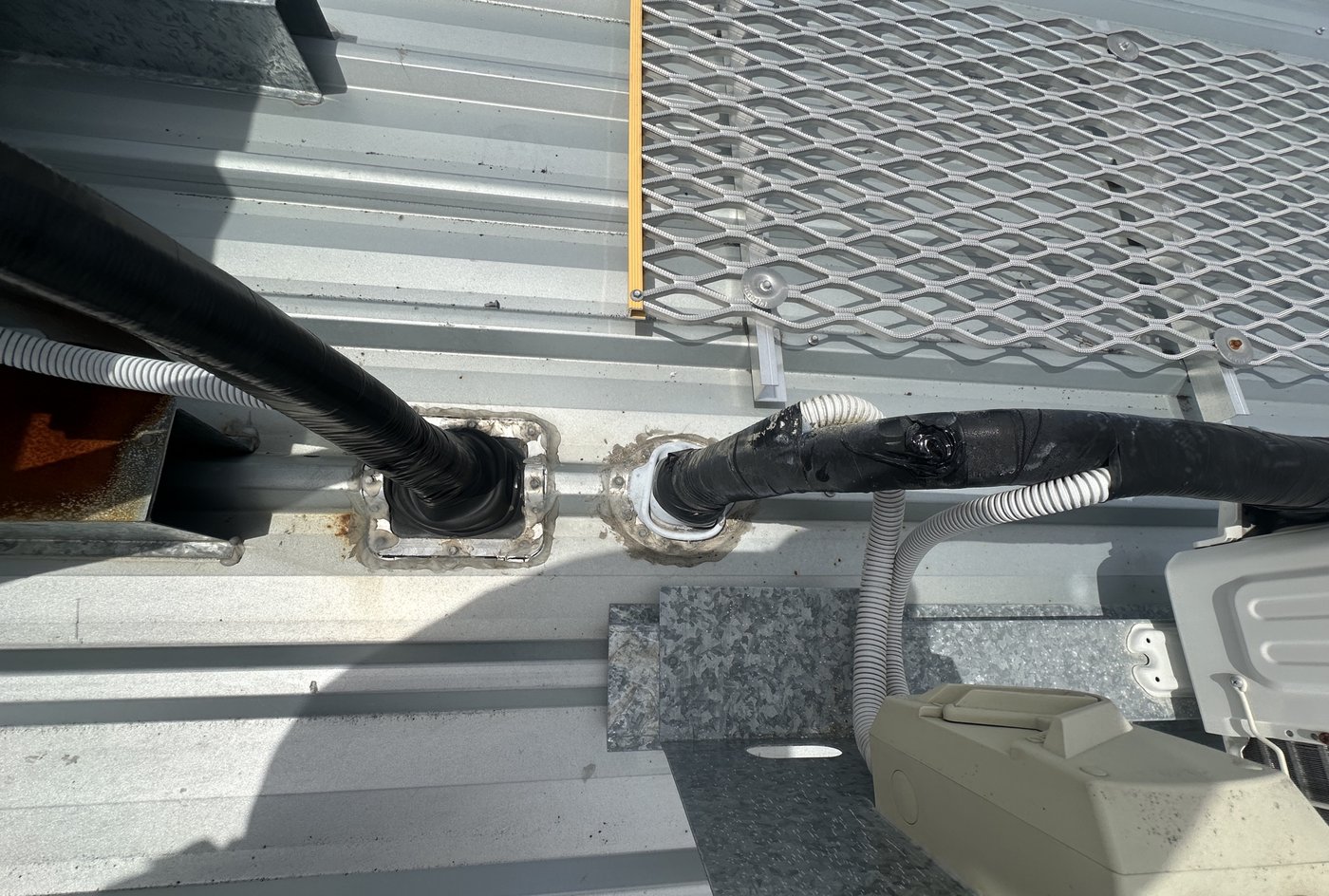
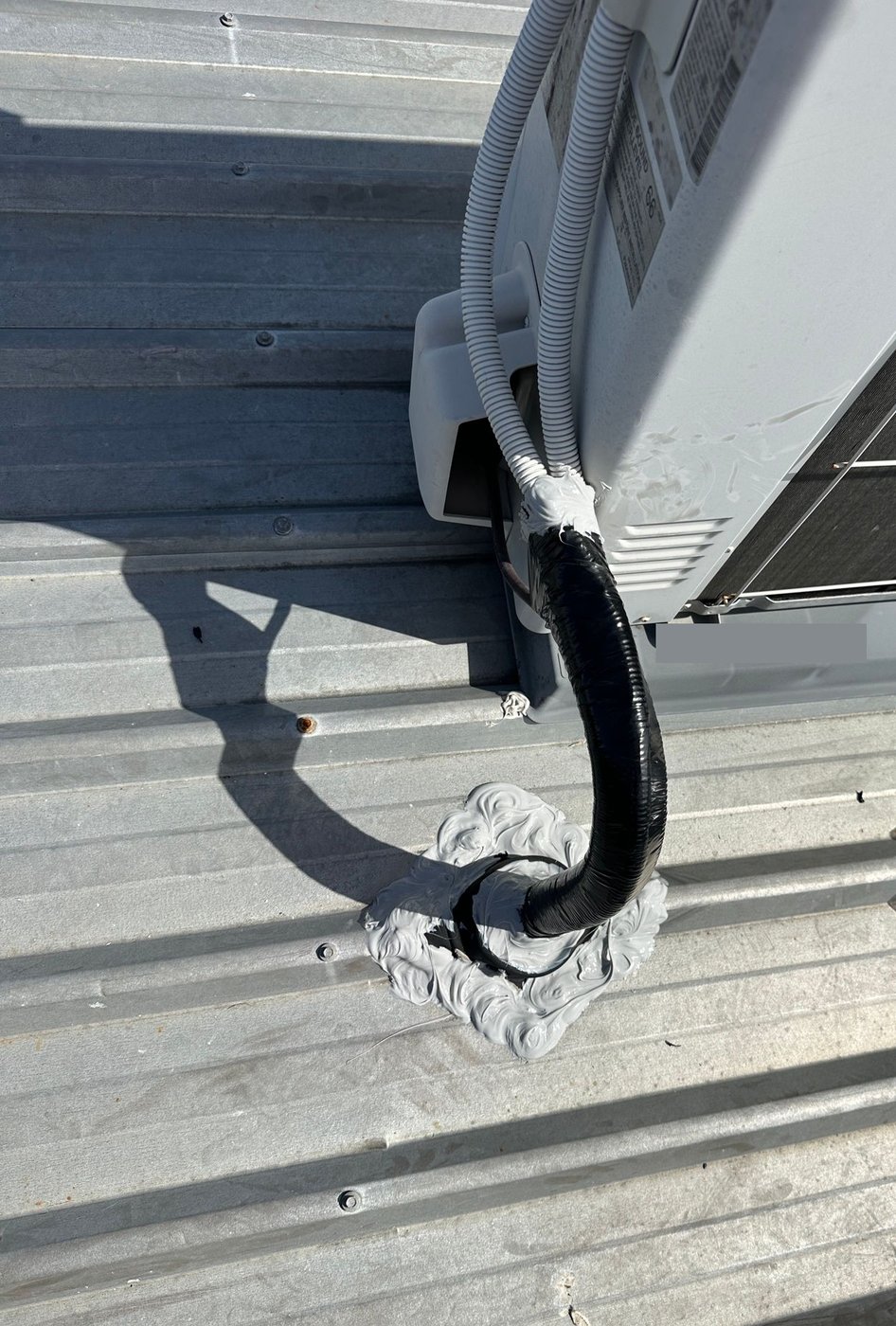
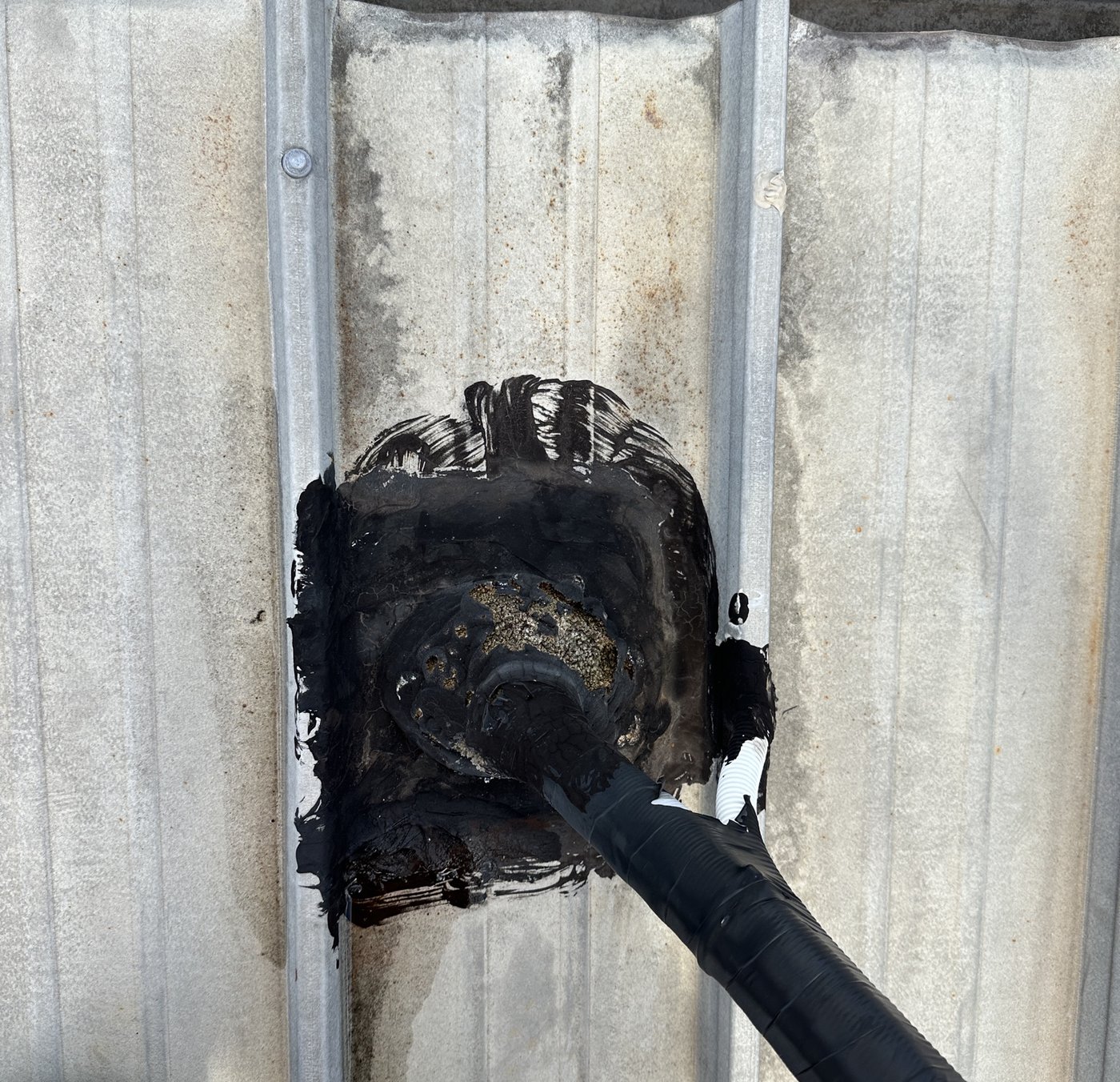
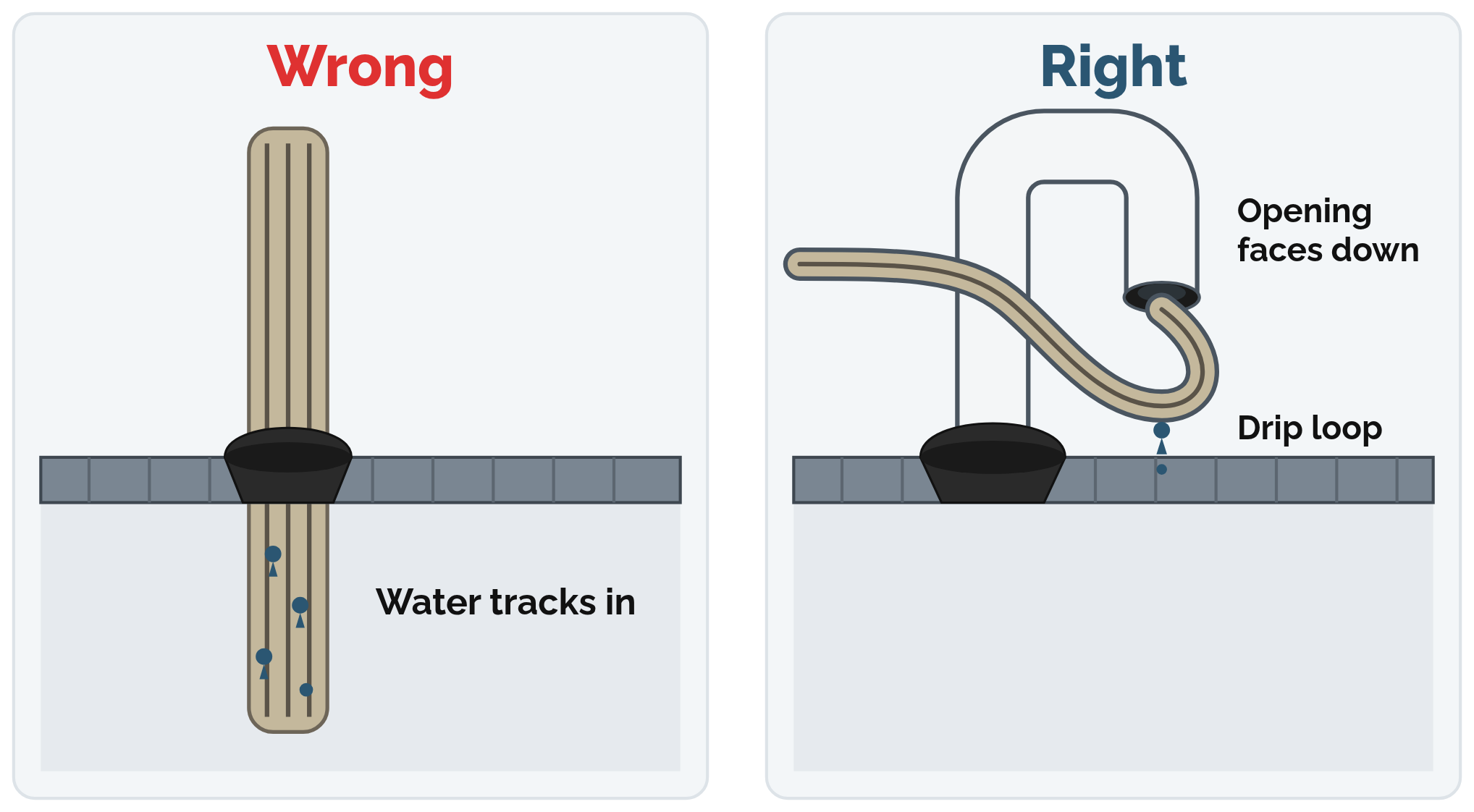
When pipes, cables and conduit are routed straight down into the roof with no gooseneck or U-trap, water runs along and between them. Lagging and tape are not a waterproof penetration. In our experience, lagging can let a significant amount of water into the roof cavity, and it is not something that can be successfully sealed as a lasting fix.
Open or unsealed electrical conduit and cable entries next to the pipes give water another path in, even if the pipe lagging itself has been wrapped.
Common reasons these penetrations leak
Around air-conditioning units on metal roofs, we regularly see:
- Perished, UV-degraded, missing or loose lagging and tape. Ordinary pipe insulation used outdoors needs UV protection; left in the sun, it becomes brittle, splits and lets water in.
- Open or unsealed electrical conduit and cable entries next to the pipes.
- Perished seals and dektites around the AC area.
- AC feet or platforms fixed through, or sitting directly on, the sheets, rusting the pans and perishing the seals.
- Leaf build-up behind units or stands that don’t follow the fall of the roof, so water sits against the penetration.
How a top hat kit stops it
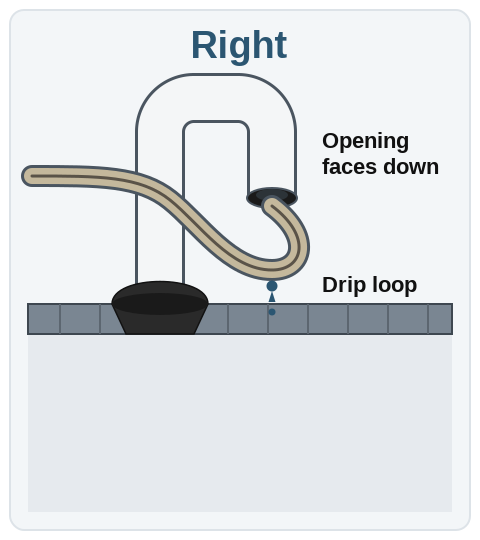
A Top Hat-style kit provides a protected U-bend for the pipework. The lines rise into a capped riser and enter through the side, so water cannot track down into the roof even if the lagging and tape are in poor condition. It also forces the pipes and conduit to be routed correctly, instead of straight down through the sheet.
DEKS Industries makes a Top Hat Roof Kit for this job. The current kits on the DEKS site are DTHRKIT65, DTHRKIT80 and DTHRKIT110, with clearance diameters of 65 mm, 76 mm and 103 mm. A 65 mm Twin kit is also listed. Each kit includes a slotted riser, cap, Dektite® flashing, sealant and screws. Similar kits are available from most plumbing suppliers. Confirm the clearance and flashing will suit the pipes and the roof profile before ordering.
See the DEKS Top Hat Roof Kit (and the HVAC range).
Download the DEKS HVAC brochure (PDF).
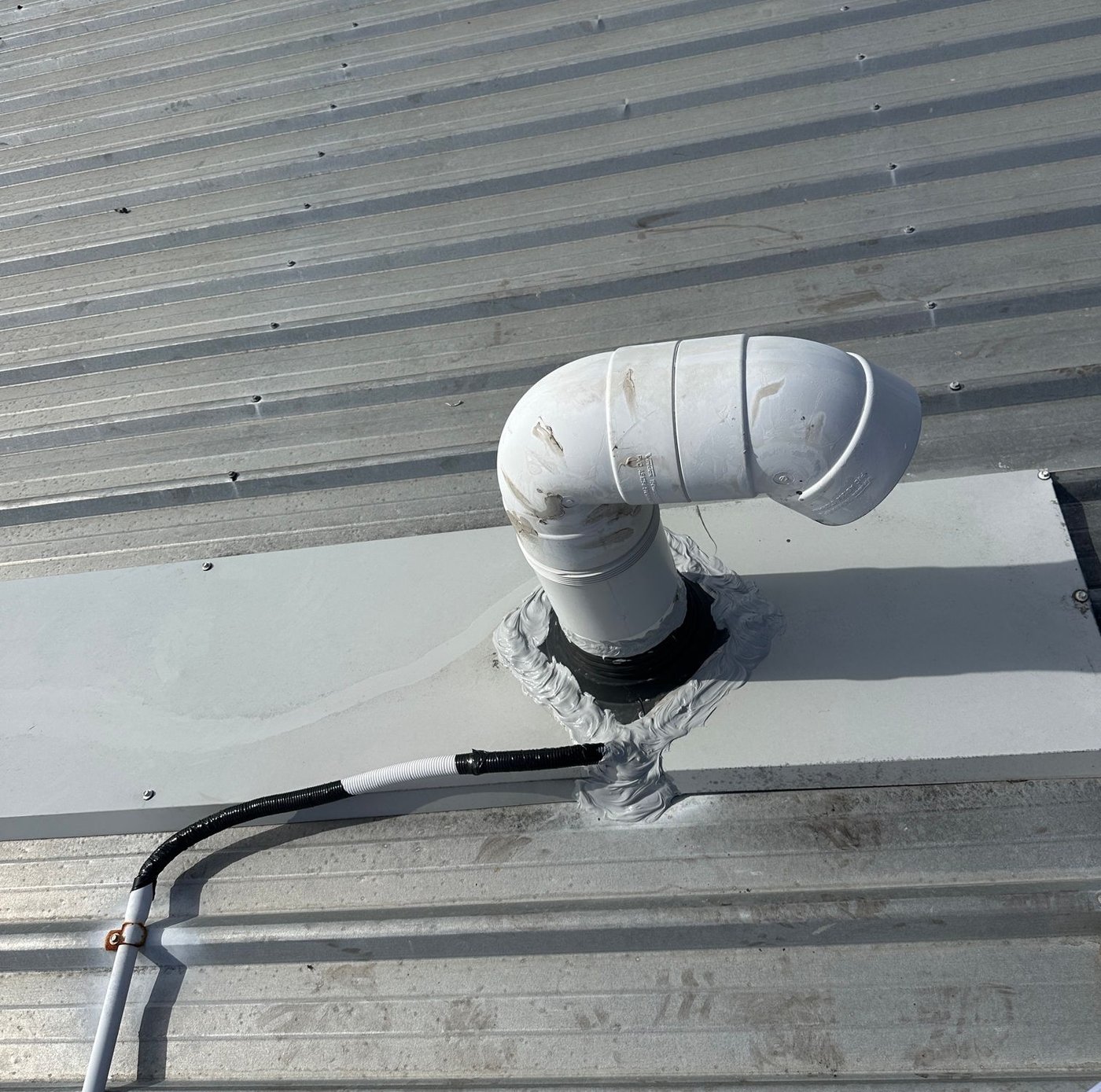
A gooseneck from 90 mm PVC
A top-hat style gooseneck can also be made from 90 mm PVC pipe and fittings. That is typically a vertical 90 mm PVC riser, sealed to the roof with a suitable flashing such as a Dektite, with bends at the top so the opening faces down. The pipes and cables should enter from below that opening so they form a drip loop — water then drips off at the low point rather than tracking into the roof.
Australian-standard PVC pipe and fittings made for outdoor use are typically UV-stabilised. Painting is optional and mainly for appearance. The flashing at the base still needs to suit the pipe size and the roof profile.
Whether you use a manufactured kit or a gooseneck made from PVC, this work should be done by the air-conditioning installer.
What can be done now, and what lasts
A roofer can strip old tape and sealant, re-lag and re-tape the pipes, reseal the penetration, and coat the area with a UV-stabilised membrane (such as Emer-Clad). That can extend the service life, but it is a temporary fix. It does not change the straight-down path that lets water track in.
The lasting fix is for an air-conditioning or HVAC technician to re-route the pipes through a Top Hat-style gooseneck — a manufactured kit, or one made from PVC pipe and fittings as described above. We are roofers, not AC technicians, so that part of the work sits with them. Open or unsealed conduit should be fixed by an electrician.
For property managers, strata and body corporates, the practical policy is to require a gooseneck or Top Hat-style kit on new AC installs, and to retro-fit older straight-in penetrations as budget allows.